
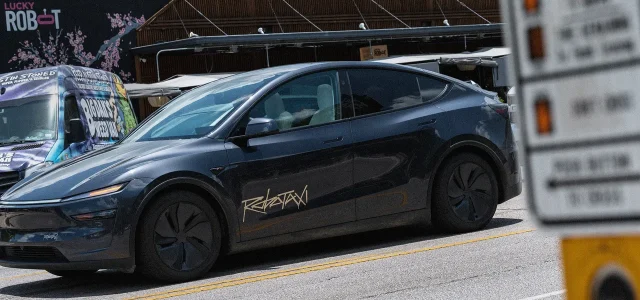
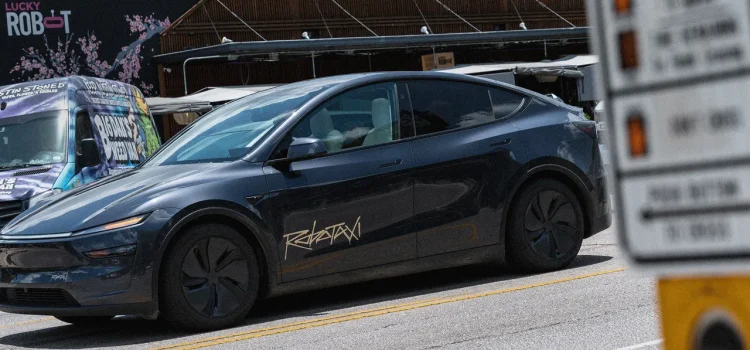
Are self-driving vehicles really just big, remote-controlled cars, with nameless and faceless people in far-off call centers piloting the things from behind consoles? As the vehicles and their science-fiction-like software expand to more cities, the conspiracy theory has rocketed around group chats and TikToks. It’s been powered, in part, by the reluctance of self-driving car companies to talk in specifics about the humans who help make their robots go.
But this month, in government documents submitted by Alphabet subsidiary Waymo and electric-auto maker Tesla, the companies have revealed more details about the people and programs that help the vehicles when their software gets confused.
The details of these companies’ “remote assistance” programs are important because the humans supporting the robots are critical in ensuring the cars are driving safely on public roads, industry experts say. Even robotaxis that run smoothly most of the time get into situations that their self-driving systems find perplexing. See, for example, a December power outage in San Francisco that killed stop lights around the city, stranding confused Waymos in several intersections. Or the ongoing government probes into several instances of these cars illegally blowing past stopped school buses unloading students in Austin, Texas. (The latter led Waymo to issue a software recall.) When this happens, humans get the cars out of the jam by directing or “advising” them from afar.
These jobs are important because if people do them wrong, they can be the difference between, say, a car stopping for or running a red light. “For the foreseeable future, there will be people who play a role in the vehicles’ behavior, and therefore have a safety role to play,” says Philip Koopman, an autonomous-vehicle software and safety researcher at Carnegie Mellon University. One of the hardest safety problems associated with self-driving, he says, is building software that knows when to ask for human help.
In other words: If you care about robot safety, pay attention to the people.
The People of Waymo
Waymo operates a paid robotaxi service in six metros—Atlanta, Austin, Los Angeles, Phoenix, and the San Francisco Bay Area—and has plans to launch in at least 10 more, including London, this year. Now, in a blog post and letter submitted to US senator Ed Markey this week, the company made public more aspects of what it calls its “remote assistance” (RA) program, which uses remote workers to respond to requests from Waymo’s vehicle software when it determines it needs help. These humans give data or advice to the systems, writes Ryan McNamara, Waymo’s vice president and global head of operations. The system can use or reject the information that humans provide.
“Waymo’s RA agents provide advice and support to the Waymo Driver but do not directly control, steer, or drive the vehicle,” McNamara writes—denying, implicitly, the charge that Waymos are simply remote-controlled cars. About 70 assistants are on duty at any given time to monitor some 3,000 robotaxis, the company says. The low ratio indicates the cars are doing much of the heavy lifting.
Waymo also confirmed in its letter what an executive told Congress in a hearing earlier this month: Half of these remote assistance workers are contractors overseas, in the Philippines. (The company says it has two other remote assistance offices in Arizona and Michigan.) These workers are licensed to drive in the Philippines, McNamara writes, but are trained on US road rules. All remote assistance workers are drug- and alcohol-tested when they are hired, the company says, and 45 percent are drug-tested every three months as part of Waymo’s random testing program.
